
Waterproof Roofing
What to Know about Waterproof Roofing?
If you don’t consider conveniently positioned barrels or buckets to be a crucial architectural feature, there’s just one thing to do – waterproof roofing.
South Africa has an interesting climate, most of the time it’s really dry. But, for instance, in Johannesburg in summer, it pours down – the same can be said for Cape Town in winter. With an annual rainfall of 464 mm in the whole South African region, waterproof roofing might be the only way to exist safely within the comfort of your home.
Not just that, but families who have a flat roof will likely need waterproof roofing more. Flat roof waterproofing demands careful attention and frequent upkeep to maintain it in top shape.
Read on, as we elaborate on the pre-requirements and techniques used for waterproof roofing.
As you will see below we specialize in all types of Roof Waterproofing!
Waterproof Roofing - The Essentials
There are 3 main types of waterproof roofing, applicable to both sloped roofs and flat roof waterproofing.
1. Flat Roof Waterproofing with Reinforced Bitumen Membranes
The most common material used in flat roof waterproofing is Reinforced Bitumen Membranes. This technique suggests a two or three-layered approach of Reinforced Bitumen Membranes (asphalt), for the whole rooftop. Heated Bitumen is used to bind these layers collectively.
Next, Bitumen layers are mixed with a polyester binder, and create a waterproof sheet that can be rolled out. For a warm and flat room, the layers can be put over the isolation, but for a cold flat roof, the layers are dispersed across the main decks. There are several ways to attach these Bitumen Membranes, including: Pour & Roll, a gas torch, the cold implementation, or the self-adhesive procedure.
The issue here lies with flat roofs and their tendency for pooling water. So it’s sufficient to conclude that Bitumen Membranes aren’t really ideal for flat roof waterproofing.
2. Liquid Waterproof Roofing
This waterproof roofing process consists of a specific layer that keeps the watertight roof. The method can be used on any roof type, although it is most recommended for flat roofs. The material used for liquid waterproof roofing goes by the name of GRP, or Glass-reinforced Plastic combined with stiff polyester resin.
Although the elemental composition of acrylic, polyurethane, and elastic polyester solutions is quite flexible, they’re oftentimes used for liquid waterproof roofing. Fiberglass Liquid Membranes are the go-to approach here, with the GRP as the most used and Fleece Reinforcements Liquid Membranes as the second-best option.
3. Waterproof Lab’s Firestone RubberGard™ EPDM Roofing
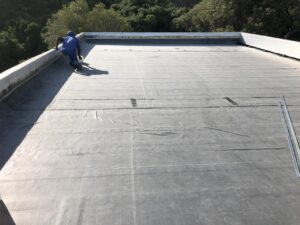
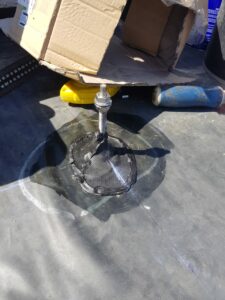
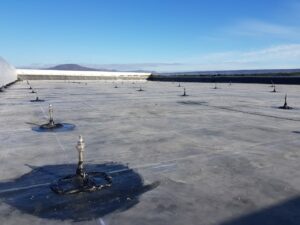
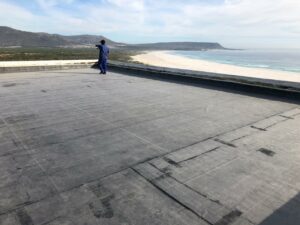
We’re not saying that the previous two methods for waterproof roofing are bad, it’s just that, in our opinion, EPDM rubber is a better option. EPDM, or ethylene propylene diene monomer rubber is a very durable and long-lasting roofing solution and is an M-class rubber. If placed and preserved properly, this sophisticated material may last up to 50 years, making it suitable for all waterproof roofing construction types.
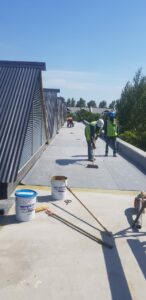
It’s perfectly designed to withstand any climate change and cover a moderately sloped roof or a flat roof for corporate, domestic, and industrial facilities. As a method, EPDM is preferred a lot because of its flexible nature, the minimization of joint connections, its simplicity, and rapidness of administration, its anti-UV properties, and cost-efficiency.
And the interesting thing is, it’s well-suited for green roofs, too!
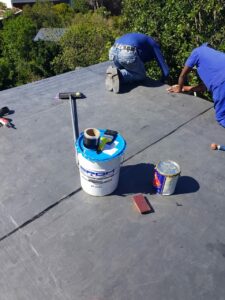
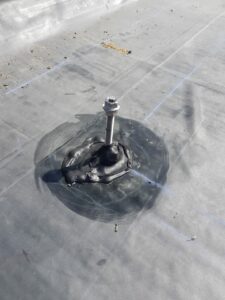
One of the most important benefits that make EPDM a top choice for waterproof roofing is that it requires no maintenance, at all! Other top benefits include no electricity or a torch, the chemical adherence to timber, bricks, stones, and concrete blocks, using a designated binding adhesive. Not to mention, it’s a single-ply membrane so there’s no need to install layers upon layers of material. Lastly, all EPDM waterproof roofing solutions are environmentally friendly, reusable, provide insulation, request no maintenance, and are really simple to install even over outdated waterproof protection.

What to Consider When Applying for Waterproof Roofing?
Waterproof roofing, and even flat roof waterproofing, need heads-up thinking before the procedure is done. Such aspects include:
- The setting: Be wary about external factors, like industrial pollution and the overall setting and location before getting waterproof roofing.
- The structure that needs waterproofing: Analyze the substrate that you want to waterproof closely. Whether it’s made out of wooden material, stone, clay concrete, metal, or steel. Is it a moderately sloped roof or a flat one? Is there a parapet balcony or wall anywhere near the roof? You should ask and answer all of these questions for the best outcome. After that, with proper consulting, choose the method and material that’s most suitable for your structure.
- Pricing: Every type of material and method comes with a different price tag. So, you want to both choose the most cost-effective and the most suitable waterproof roofing method for your structure.
Rain, Who? The Verdict
Every construction roof that suffers water damage, demands to be waterproofed – no matter the material, and the angle it’s positioned at. It’s just sound advice. Choosing the most suitable material for your waterproof roofing is the only key factor to consider.
If you need the extra helping hand – at Waterproof Lab, waterproof roofing is what we do best (we also excel at Damp Proofing), using the ever-popular EPDM approach as its sole importer in South Africa. With longevity of over 50 years, this rubber miracle worker is your ultimate roofing solution – and we got your back!
Waterproof, hassle-free, and downright secure – this is a lifetime investment that pays off!
